What Happens If You Breach a Prop Firm Rule Mid-Trade (Not Just End of Day)
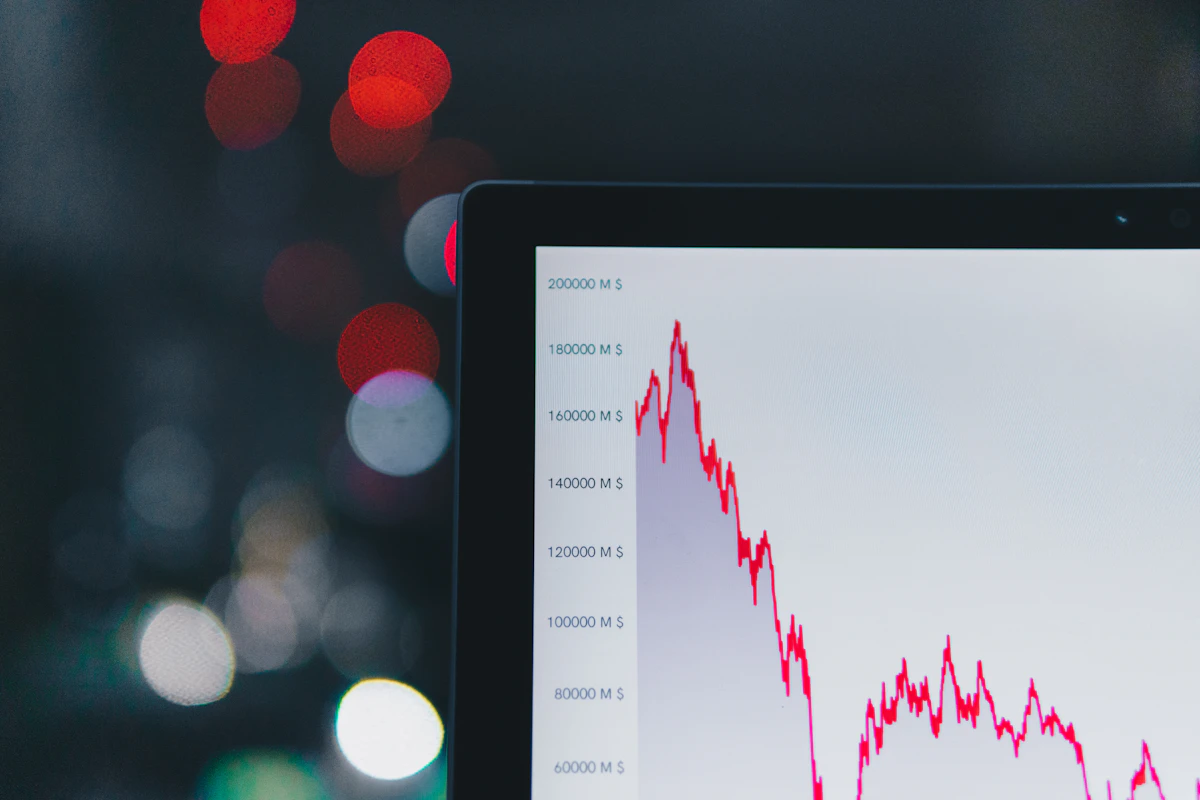
The rule breach that ends most funded accounts doesn't happen at the closing bell. It happens mid-trade, while you're staring at an open position that just ticked against you faster than you expected. Most traders think of prop firm rules in end-of-day terms — "as long as I close green today, I'm fine" — and that mental model gets people liquidated on intraday trailing drawdown accounts and Topstep's Maximum Loss Limit constantly. The rule doesn't care that you were about to add to a winner or that your stop was 20 ticks away. If your unrealized P&L crosses the threshold at any instant during the session, the account is done, often before you've even seen the alert.
This piece is specifically about what happens the moment a breach fires while a position is still open — not the tidy end-of-day math most explainer articles cover. That distinction matters because the mechanics, the timing, and what you can and can't do about it are completely different depending on whether your firm evaluates risk once per day or tick-by-tick in real time.
Two Completely Different Risk Models: End-of-Day vs. Real-Time Monitoring
Every major futures prop firm falls into one of two camps, and knowing which camp your account is in changes how you should size positions entirely.
End-of-Day (EOD) Accounts: You Get to the Close, Then It's Judged
On an EOD-drawdown account, the firm calculates your trailing floor once, using your end-of-day balance. During the session your open position can be down far more than your account's drawdown limit and nothing happens automatically — the breach only registers if your closed, realized balance is below the floor when the calculation runs at the end of the day. This gives you room to be underwater intraday and recover, as long as you close the position (or the day) above the line.
Intraday / Real-Time Accounts: The Floor Is Live, Tick by Tick
This is where mid-trade breaches actually happen. On an intraday-trailing account — Apex's Intraday Trail product, Topstep's Maximum Loss Limit, or FTMO's daily loss rule — your unrealized P&L counts against the threshold in real time, every tick, whether or not you've closed anything. Apex's own help center is explicit about this: the platform (RTrader or Tradovate) continuously monitors your trailing max drawdown, and the auto-liquidation threshold reflects your floating equity, not just your closed balance. If your floating loss on an open position pushes your account equity below that threshold for even a moment, the evaluation or funded account fails right there — it does not wait for you to close the trade, and it does not care if price reverses back in your favor thirty seconds later.
Topstep's Maximum Loss Limit (MLL) works the same way structurally. Per Topstep's own documentation, "if your balance hits it at any point during the trading day, including on unrealized P&L, your account is liquidated immediately." On a $50K Trading Combine that MLL sits at $2,000; on $100K it's $3,000; on $150K it's $4,500 — and it's non-negotiable, Topstep states plainly that "the MLL cannot be adjusted or changed... no exceptions." FTMO runs a similar real-time model on its daily loss rule: the 5% daily loss cap is measured against floating losses on open positions, not just realized ones, and resets at a fixed hour each day. If your open drawdown touches that daily floor intraday — even briefly, even if the trade would've recovered a minute later — you've breached, full stop.
What Actually Happens the Instant You Breach
The sequence is mechanical, not discretionary, and it happens faster than most traders expect the first time it hits them:
- The platform's risk engine detects the threshold cross. This runs on the broker/platform side (Rithmic, Tradovate, or the firm's own bridge), not on a human reviewing your account after the fact.
- Open positions are force-closed at market. You don't get to choose the exit price. If you were long and price gapped through your floor on a fast tape, you eat whatever fill the liquidation engine gets, which can be worse than the exact threshold price.
- Pending orders get cancelled. Any working limit or stop orders tied to the position are cancelled as part of the same sweep.
- The account is flagged as failed (evaluation) or breached (funded/PA). On an eval this typically ends it outright. On a funded account it usually triggers the firm's breach process, which for most firms means the account closes and you're back to needing a new evaluation or a reset, if the firm still offers those.
Apex's help documentation flags an important nuance here: the firm's 4:59 PM ET auto-close-out is described explicitly as "a fail-safe, not a primary trade-close tool." The wording matters — Apex is telling you not to rely on any automatic safety net, including the drawdown liquidation itself, because slippage on the forced exit can push your final print past where you thought the threshold sat. A move that gaps through your floor doesn't get liquidated exactly at the floor; it gets liquidated at the next available price, which during fast futures moves (an NFP print, a surprise Fed headline, an equity index air pocket) can be meaningfully worse.
Why This Catches Discretionary Traders Specifically
The traders who get burned by mid-trade breaches are almost never careless. They're usually disciplined about their realized P&L and their daily loss limit in the abstract — they just haven't internalized that unrealized P&L on a single trade can breach the account before they've had a chance to react. A few concrete scenarios that actually happen:
Holding Through a Scheduled News Release
You're in a small size position ahead of CPI or an FOMC decision, telling yourself your stop is "wide enough." A two-standard-deviation move on the release can blow straight through a stop that looked reasonable on a calm Tuesday. On an intraday-trailing account, that spike counts against your drawdown the instant it happens — there's no grace period for "the market overreacted and it came back ten minutes later." Related: how economic news events move futures covers the size of these moves specifically.
Adding to a Losing Position ("Averaging Down")
Each additional contract added to a losing trade multiplies your unrealized loss per tick. On a $50K Apex Intraday Trail account with a $2,000 drawdown, doubling your size on a trade that's already down $600 means the next 60 ticks against you (on ES, roughly 15 handles) end the account instead of the next 120. Averaging down doesn't just increase risk linearly — it compresses the time you have to react before a real-time monitor pulls the trigger.
Gapping Overnight or Through Illiquid Hours
If your firm allows overnight holds and you carry a position through a session with thin liquidity (the Sunday open, a holiday-adjusted session), a gap against you is realized against your live threshold the moment the market reopens — you don't get to see it coming and cut it first. This is a large enough risk on its own that it's worth reading separately on overnight gap risk before holding anything past the close on a real-time account.
EOD vs. Intraday Drawdown: A Side-by-Side Comparison
| Factor | End-of-Day (EOD) Drawdown | Intraday / Real-Time Drawdown |
|---|---|---|
| When unrealized P&L counts | Only if still open at the EOD calculation time | Continuously, every tick, all session |
| Can you recover from an intraday spike? | Yes, if you close or the market recovers before EOD | No — breach is final the instant it happens |
| Typical drawdown size (same account, Apex example) | Same nominal $ threshold | Same nominal $ threshold, but effectively tighter risk-adjusted |
| Best suited for | Traders who hold through midday chop but close flat or net green | Scalpers/day-traders comfortable being monitored live tick-by-tick |
| Forced-liquidation risk on news spikes | Low, unless still open at EOD calc | High — a single wick can end the account instantly |
Neither model is objectively "safer" in isolation — it depends entirely on how you trade. A trader who holds positions through midday consolidation looking for an afternoon trend is better matched to EOD; a trader who scalps and always has a hard stop within a few ticks doesn't lose much by trading intraday-monitored accounts, because their worst-case unrealized excursion is already small and controlled.
What You Actually Control Here
You cannot negotiate the threshold, and you cannot appeal a liquidation that fired correctly according to the rules — firms are consistent about this, and Topstep states outright that risk settings "cannot be adjusted or changed... no exceptions" once set. What you control is entirely upstream of the breach:
- Size for the drawdown, not for the account balance. A $2,000 drawdown on a real-time account should dictate your max contracts long before your account size does. Work backward: how many ticks of adverse movement, at your position size, would consume the entire drawdown — and is that a realistic stop distance for the setup you're trading?
- Know your firm's specific mechanic before you fund it, not after. "Trailing drawdown" is not one rule — it's at minimum two very different risk models depending on the firm and the product line you bought. Read the actual current help-center documentation for your specific account type, because firms change these mechanics (Apex overhauled its entire product line as recently as March 2026).
- Treat scheduled news releases as a hard stand-down for real-time accounts, or reduce size to a level where even a full adverse spike through your stop doesn't approach the drawdown floor.
- Don't rely on any auto-close safeguard as your actual risk management. Apex says this about its own 4:59 PM close-out feature explicitly — safeguards exist for cases where you failed to manage the position yourself, and the fill you get from one is not guaranteed to be favorable.
The Bottom Line
If you only think about prop firm rules as an end-of-day scoreboard, you're trading a completely different risk model than the one you're actually funded under — and on any real-time monitored account (which is most of what Apex, Topstep, and FTMO sell today), that gap in understanding is what actually ends accounts, not bad trade ideas. The traders who survive funded accounts long-term aren't the ones with the best win rate; they're the ones who've internalized exactly when their unrealized P&L becomes real, and who size every single position as if the liquidation engine is watching in real time — because on most current account types, it genuinely is.